Newsletter Subscribe
Enter your email address below and subscribe to our newsletter
Enter your email address below and subscribe to our newsletter

 ByJohn A
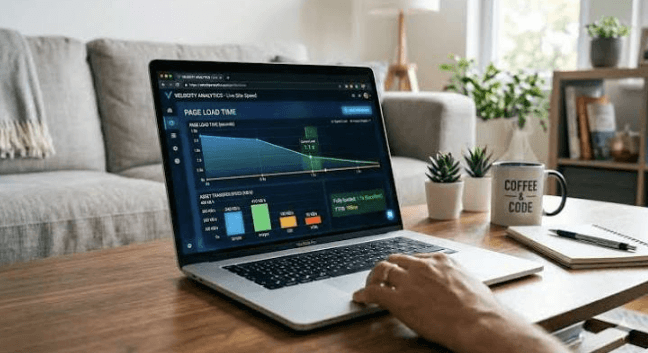
Monitoring translates system activity into precise signals that guide performance decisions. Instrumentation turns events into data, enabling visibility across workloads, latency budgets, and contention points. Observability practices establish baselines, alerts, and feedback loops to drive proactive tuning and reliability targets. By linking telemetry to design choices and cross-functional collaboration, monitoring supports resilient, vendor-neutral optimization. The conversation centers on how data shapes architecture and workflows, inviting further exploration of concrete metrics and actions.
Monitoring delivers concrete, actionable insights that directly inform performance engineering decisions. In practice, monitoring clarifies how workloads map to latency budgeting, revealing where delays emerge and which components drive variance. It highlights resource contention, guiding collaboration across teams to rebalance priorities, allocate capacity, and prevent regressions. The result is a proactive, data-driven approach that preserves freedom while tightening system reliability.
Instrumentation and data collection establish the foundation for actionable performance insight by translating system activity into precise signals that teams can analyze and action upon.
The approach emphasizes disciplined instrumentation cadence, capturing relevant events with minimal overhead.
Data storytelling then translates metrics into narratives, guiding collaborative decision making.
This data-driven stance enables proactive optimization while preserving freedom to innovate and iterate.
See also: echo-turf
Baselining, alerts, and feedback loops form the core observability practices that translate raw telemetry into dependable action. In a data-driven, proactive workflow, teams compare baselines against latency budgets, triggering timely interventions and adaptive responses. Alerts illuminate anomalies, while feedback loops close the loop with iterative improvements. Chaos experiments test resilience, promoting collaboration, learning, and disciplined experimentation across freedominspired, cross-functional functions.
How can monitoring transform the design and tuning of systems to improve reliability? Data-driven insights fuel deliberate design choices, continuous tuning, and proactive risk mitigation. Cross-functional teams collaborate to translate metrics into concrete changes, preserving vendor neutrality and fostering cultural alignment. Monitoring guides architectural refinements, validates reliability targets, and accelerates verified improvements, while empowering stakeholders to maintain freedom through transparent, measurable decision-making.
The true cost of monitoring is quantified through cost accounting, overhead budgeting, and data retention implications, guiding user centric observability decisions; collaboratively, it remains data-driven, proactive, and freedom-oriented, balancing transparency with scalable investment.
Trade-offs exist between granularity and overhead; finer monitory granularity improves insight but elevates resource overhead, while coarser granularity reduces overhead at the expense of detail. The approach balances proactive collaboration with data-driven evaluation and freedom-focused decision making.
Latency budgeting and anomaly taxonomy are universally essential across domains, the metrics pros insist. Irony aside, the data-driven, proactive approach positions teams as collaborative guardians, delivering freedom-loving transparency while maintaining disciplined, universal observability standards.
Monitoring influences organizational culture by embedding data-driven rituals, clarifying ownership, and reinforcing leadership accountability; it aligns teams around shared metrics, fosters proactive collaboration, and cultivates a culture where ownership and continuous improvement drive freedom within accountability.
Forecasts favor Future observability, AI enabled tracing, and edge analytics, with Cloud native instrumentation and governance shaping scalable, proactive ecosystems. A data point shows early adopters cut MTTR 40%, signaling collaborative progress toward freer, adaptive architectures.
In this landscape, monitoring is the quiet compass guiding performance engineering. Signals Become maps, tracing workloads to latency budgets; baselines grow into credible benchmarks; alerts sharpen response as feedback loops tighten the ship. Data-driven, teams collaborate like interlocking gears, turning observations into design choices, tuning, and reliability targets. Symbolically, telemetry is the weather forecast for systems: forewarned by data, we steer toward resilience, efficiency, and vendor-neutral innovation, with measurement anchoring every decision.